Camper Van Packing List: The Complete Essentials
Last Updated on 22 June, 2026 by Veronica
Packing for a camper van, RV, or motorhome trip is different from packing a suitcase — space is limited, everything needs a place, and the things you forget are the things you’ll miss most. This list comes from years of actually living it: we’ve traveled in a Renault Trafic with a portable toilet in the middle of the van, and now in a Citroën Jumper with a fixed bathroom. Both setups taught us different lessons, and this list reflects both.
Whether you’re planning a weekend getaway or a long road trip as a couple, here’s everything worth packing — organized by category so you can skim straight to what you need.
Related reading: Beginner van travel tips · The best travel fridges
Food & Cooking
Kitchen space in a van is tight, so everything earns its spot by being useful, stackable, or both.
The fridge decision matters most. We’ve owned a 220V inverter fridge and now a 3-way fridge (works on gas, electricity, or 12V), and the 3-way wins for us — it’s more efficient and barely touches the van battery. The trade-off: on 12V alone it doesn’t cool as well, but on gas or mains power it’s excellent. Browse 3-way and portable fridges — we go deeper on every type in our guide to portable fridges for travel.
Cooking setup: we’ve gone from a flat Campingaz on cartridges, to a single-burner stove on a propane cylinder, to a built-in stove in the Jumper. The flat version is more stable on a table; the cylinder-fed burner has more power — buy it a cheap base if it feels wobbly.
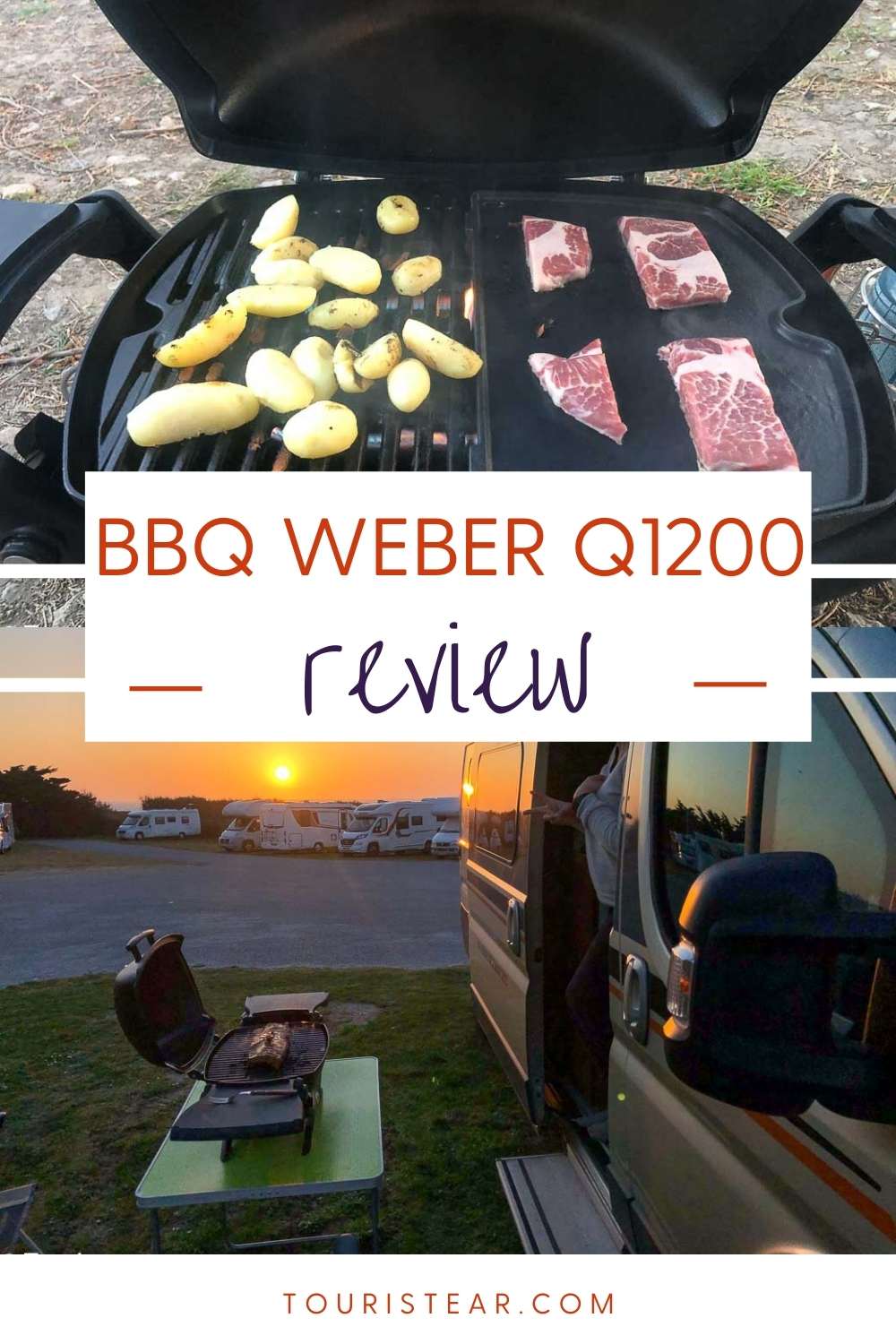
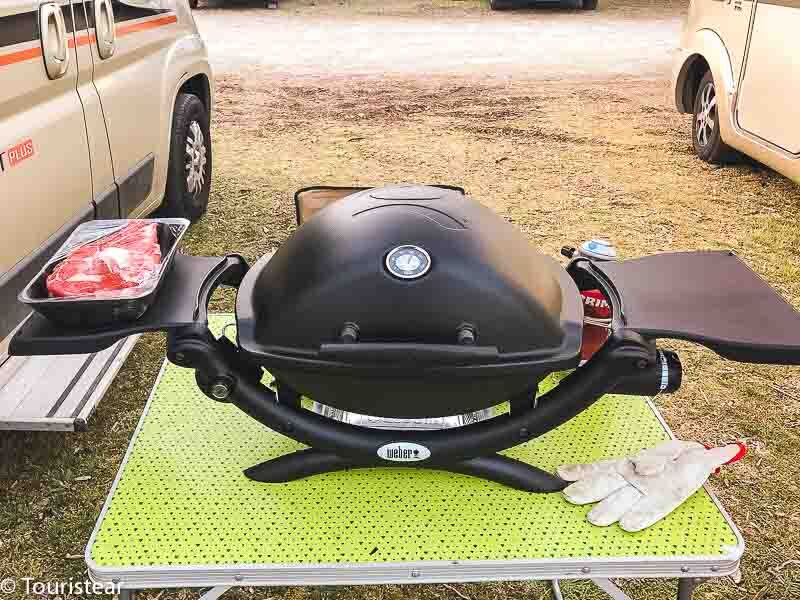
Portable BBQ: we switched from charcoal to gas because charcoal grills are now banned in a growing number of European spots (some campsites too). Our Weber Q1200 is light, powerful, works on both cartridge and cylinder gas, and folds down small — great for four people. Looking for something cheaper? This portable gas grill does the job.
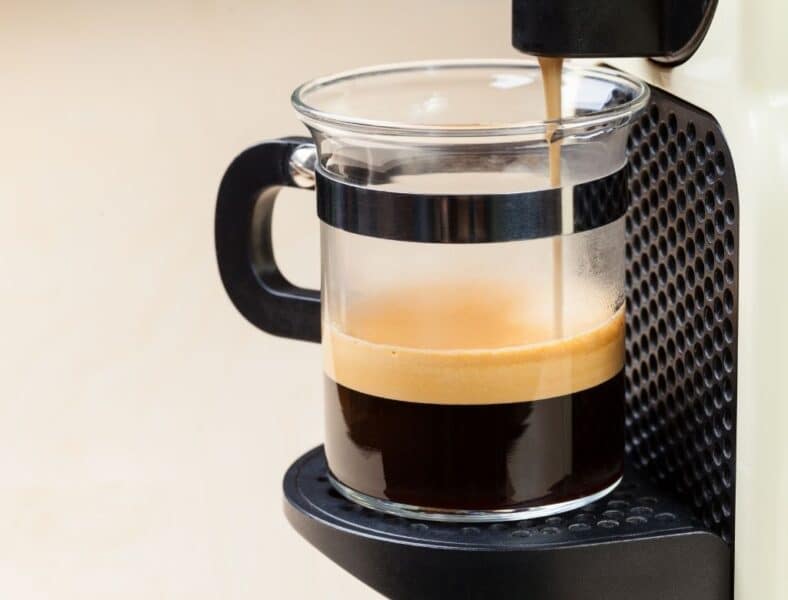
For couples: skip the full dinner set and pack two of everything good instead of four of everything basic — two real mugs, a moka pot for proper coffee, a pour-over coffee maker if you’re picky about coffee, and a moka/Italian coffee maker if you want it strong.
Kitchen checklist:
- Plastic food storage containers — keeps food organized and bugs out
- Stackable organizer bins for small items
- Collapsible cookware set — pot, pan, drainer in one
- Cast-iron skillet or dutch oven
- Foldable cutting board with built-in colander
- Camping knife set
- Break-resistant melamine crockery and travel mugs
- Travel cutlery set
- Microfiber dish cloths and reusable paper towels
- Travel kettle and folding toaster
- Corkscrew/bottle opener combo and can opener
- Vegetable peeler
- Eco dish soap, sponges, reusable silicone bags
- Heat-resistant trivets, lighter
- Folding trash can — please recycle where you can
- Water purification tablets for your water tank
Pantry staples: spices/salt/pepper/oil/vinegar (starter spice kit), butter, cereal, mayo/ketchup/mustard, eggs, bread, pasta, sugar, jam or honey, canned tuna and preserves, plus water, beer, wine, and soft drinks.
Hygiene & Health
This is the category people underestimate most — and the one that ruins a trip fastest if you get it wrong.
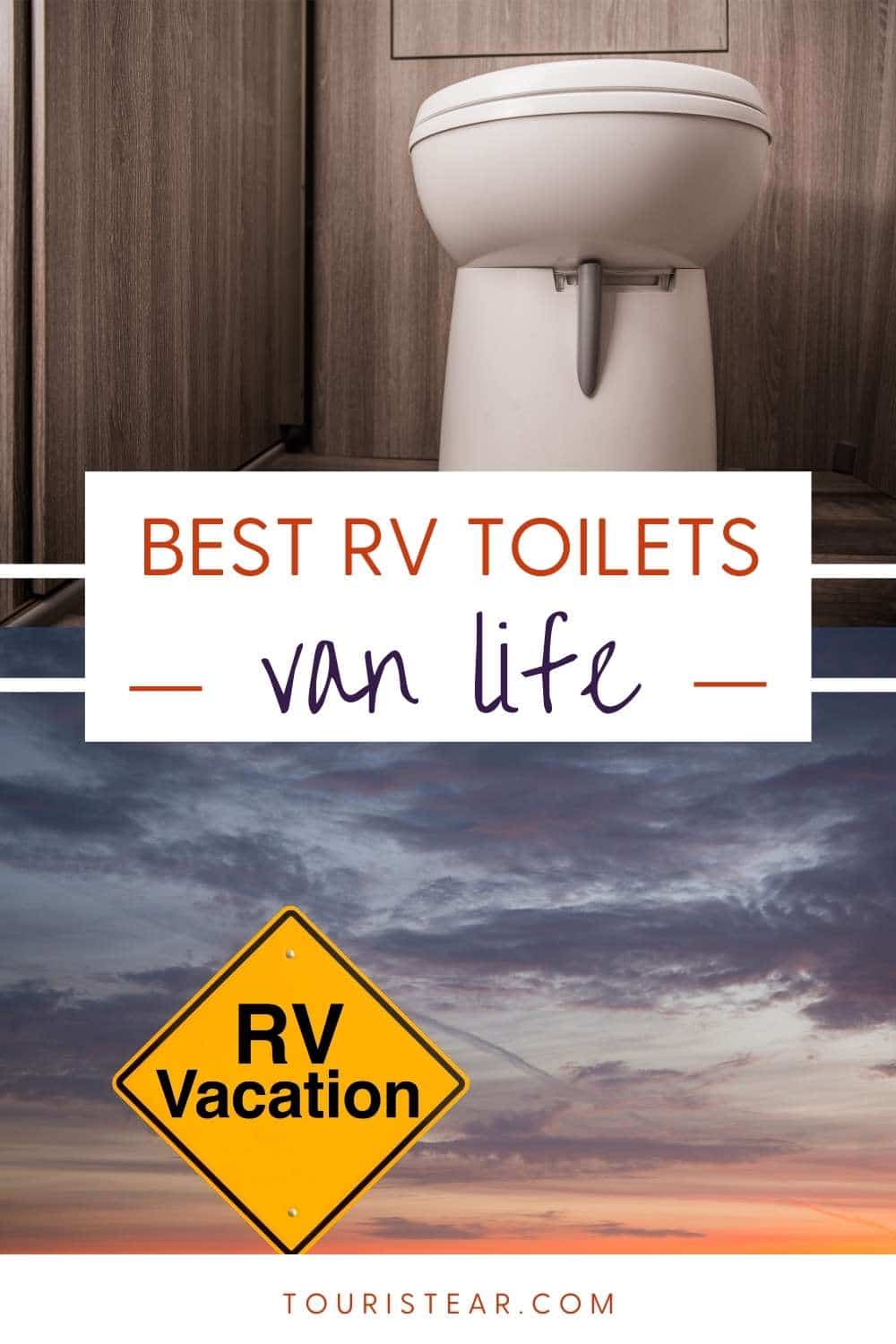
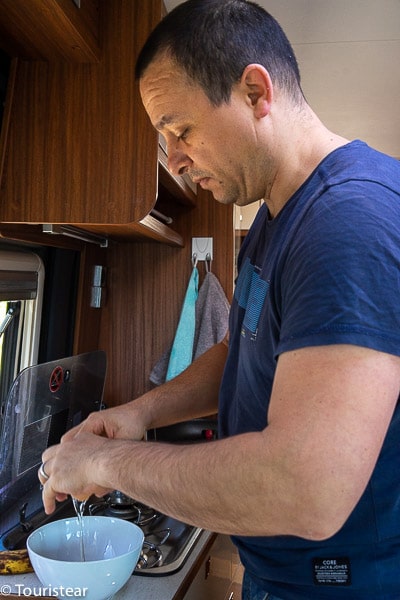
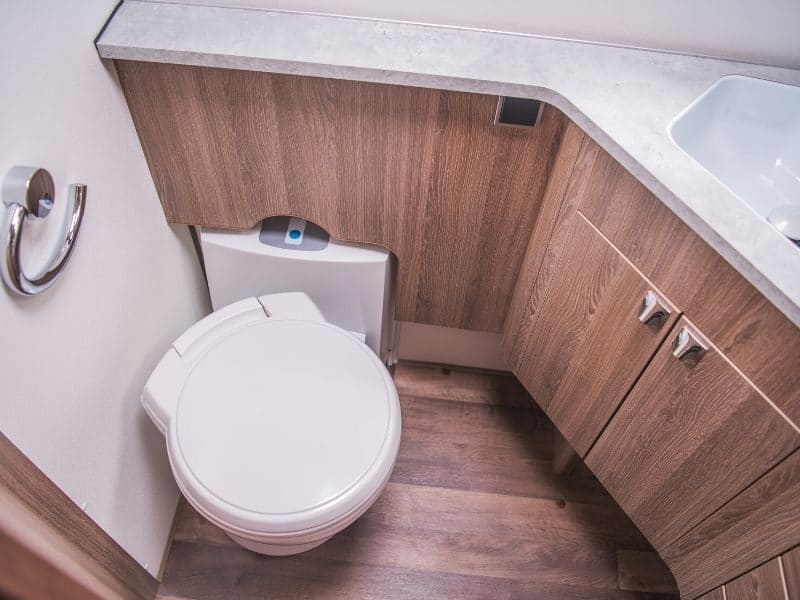
The toilet question: we prefer a portable toilet. In the Trafic it sat in the middle of the van; the Jumper has a closed bathroom, which is a real upgrade for privacy. Either way, you need the blue chemical liquid or treatment tabs — roughly 150ml of liquid to 1.5L of water — and you should empty it every 2-3 days regardless of what the fill indicator says. Best-selling option on Amazon: the Thetford Porta Potti.
Use regular toilet paper and bin it rather than the dissolving toilet paper made for chemical toilets — it works but costs more, and regular paper in the trash is simpler.
Health & checklist:
- Women’s portable urination device — genuinely useful for night stops without a bathroom nearby
- First aid kit — bandages, gauze, painkillers, scissors, antiseptic
- Quick-dry microfiber towels — one big, one small
- Portable shower if your van doesn’t have a fixed one
- Toiletries: toothbrush, toothpaste, soap, deodorant, shampoo
- Toilet brush, moisturizer, sunscreen
- Hairbrush, hair ties, clips
Cleaning
Sweep after every meal — it’s the single best habit for keeping bugs out of a small space.
- Small broom and dustpan or a cordless handheld vacuum
- A small entrance mat keeps dirt at the door; motorhome travelers often add a larger outdoor rug under the outdoor table
- Multipurpose cleaner and disinfectant for kitchen and bathroom
- Sponges, scourers, trash bags
Sleeping
Sleep quality makes or breaks a long trip — don’t cheap out here.
We started with sleeping bags and a winter duvet in the Trafic. The Jumper has a fixed bed, so now it’s sheets and a proper duvet — not having to set up and break down the bed daily is a genuine quality-of-life upgrade if you can swing a van with a fixed layout.
For couples specifically: a memory foam mattress topper on top of your existing van mattress is one of the best money-for-comfort upgrades you can make for long trips together — sized for two, not a backpacker’s single pad. If you’re starting from scratch, look at a proper RV-sized mattress sized to your weight, not the cheapest one that fits the frame. Round it out with pillows and a thin summer blanket.
Tools & Safety
- Basic toolbox — screwdrivers, hammer, nails, wrench, cutter, pliers, Allen keys
- Fire extinguisher — mandatory in larger RVs in France, and worth having in any van regardless
- LED flashlight (ideally two, rechargeable)
- Jumper cables and a portable power station
- Mains power cable with the right adapters for campsite hookups, plus a cord reel — buy this before you arrive, campsite shops mark them up
- Tire pressure gauge, puncture repair kit, spare engine oil and transmission fluid
- Leveling blocks with a storage case — get covers, they sink into soft ground and pick up bugs if you leave them out for days
- Hose for filling your water tank plus a multi-fitting tap adapter set — European taps vary more than you’d expect
- Clothesline and clips for drying laundry, plus laundry soap
- Window covers if your van doesn’t have them built in
- Auxiliary battery and a foldable solar panel if you’re off-grid often — see our full breakdown in portable vs. fixed solar panels
- Strong tape, bike rack if you bring bikes — much easier than loading them inside, and great for grabbing groceries when you’ve parked outside town
Camping Extras
- Folding table and chairs for outdoor meals
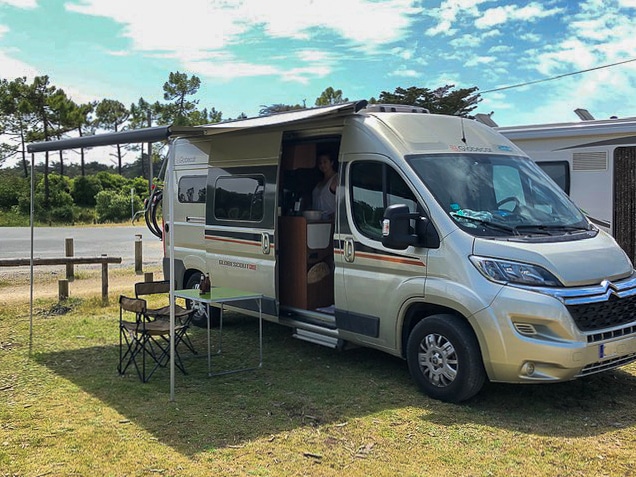
- An awning has become a non-negotiable for us — if you don’t have one fitted, an umbrella or pop-up pergola covers the basics
- Waterproof picnic blanket, citronella candles, rechargeable LED lantern
- Binoculars, an inflatable kayak (cheaper and more fun than it sounds for a quiet lake afternoon)
For couples: this is the category worth spending a little more thought on. A two-person hammock outside the van turns a random pull-over spot into an actual evening activity. A deck of cards, a travel-size game, or a small Bluetooth speaker costs nothing in van space and pays off on every quiet night with no signal.
Electronic
- A 12V phone charger plugged into the van’s lighter socket so you’re never without GPS
- Chargers for phone, tablet, laptop, Kindle, and camera
- A shared portable power bank per person, a WiFi signal amplifier if you’re working remotely, and a portable hard drive if you shoot a lot of photos
Clothing and footwear
Pack for comfort first, activities second — check the forecast before you decide on a coat or raincoat.
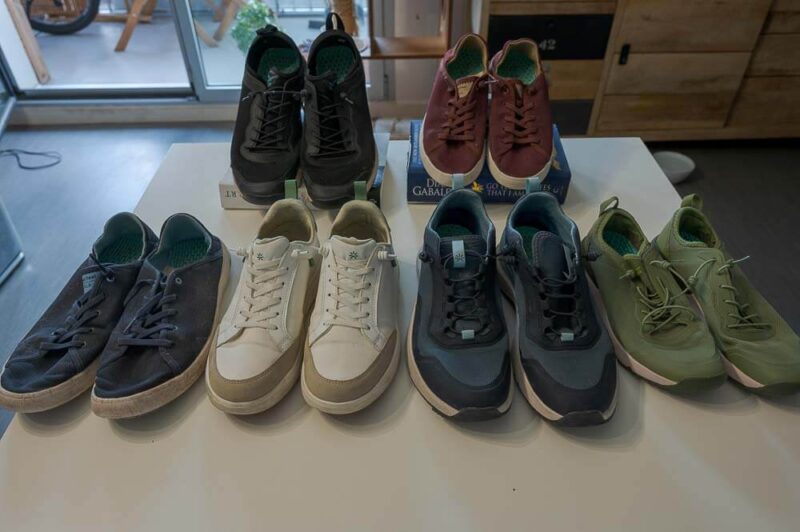
- Hiking boots, all-terrain travel shoes — we each have a pair of Tropicfeels and they’re great for the swim-to-sightseeing transition, flip-flops/sandals
- Slippers or thick socks for inside the van, plus regular socks and underwear
- Shorts, comfortable van-lounging pants, hiking pants
- Short and long-sleeve tees, sweatshirt, hat or cap
- Raincoat, warmer jacket, swimwear, watch, sunglasses
- Laundry bag, Salomon backpack for day hikes
Five rules that actually save space: stick to solid colors that mix and match; pack only wrinkle-resistant, machine-washable fabrics; if you love a piece, bring a backup in another color rather than a different style; leave at home anything you rarely wear at home; and skip white — it doesn’t survive van life. Re-wearing the same things twice is normal, not something to pack around.
What NOT to Bring
- Jewelry or expensive electronics you don’t need for work
- Firewood/charcoal gear, unless you know your stops allow it — a gas BBQ works almost everywhere instead
- Formal clothes (one outfit for a special occasion is plenty)
- Anything that isn’t comfortable footwear — sore feet ruin trips
- Paper books in bulk — a Kindle does the same job for a fraction of the weight
Before You Leave: Pre-Trip Checklist
If the van’s been sitting, check it properly: tires, water, oil, battery, AC, fire extinguisher. Check the cylinder has gas and the back is clean and ready. Confirm your papers are current — registration, insurance, roadworthiness inspection if your country requires one.
For yourselves: ID or passport, health card, travel insurance, cash, cards. Make any reservations you need in advance, install an app like Park4Night for finding overnight spots, and carry some cash alongside your cards.
A notebook and pen are worth packing too — useful as a simple trip log and for jotting down what you’ve run out of before it becomes an emergency.
Are you packing anything else? Tell us in the comments.
Plan Your Trip in Camper Van
- Tips for traveling by van for beginners
- What to eat when camping (super simple)
- Everything you need to know about Travel Insurance + DISCOUNT
- The best refrigerators for traveling
- Best Portable Toilet
- Best Portable Shower
- Portable or Fixed Solar Panels?