Traditional European Dishes from Each Country + MAP
Last Updated on 27 July, 2026 by Veronica
There are lots of ways to get to know a country. Some people go straight for the monuments and landscapes, others prefer hanging out in public squares and talking to locals, and some of us would rather dive straight into the food and let our taste buds do the exploring.
If you’re in that last group, Uniplaces, the online platform for student housing, put together some great food maps to help.
Here we’re breaking down the dish we think best represents each country. How much do you know about European food?
Pastel de Belém (Portugal, Lisbon)
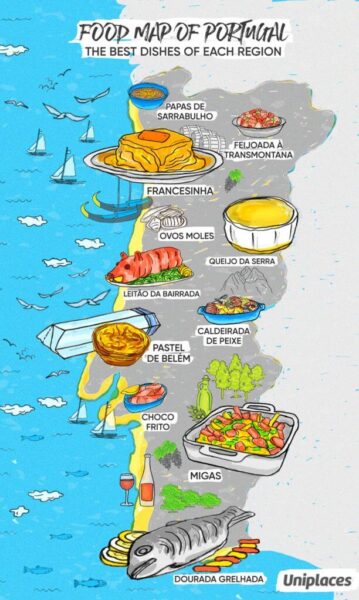
We’re kicking off our tour of Europe with the sweet treat that best represents Portugal’s capital.
These little puff-pastry custard tarts are made from a recipe dating back to the early 19th century that, supposedly, only three people on the planet actually know in full — so if you want the real deal, a trip to Lisbon is non-negotiable.
Bacalhau à Brás (Portugal)
Portugal already has the Pastel de Belém on this list, but its savory cooking deserves a spot too. Bacalhau à Brás — shredded salt cod tossed with shoestring fries, scrambled egg, olives and parsley — is one of the (reportedly) 365+ codfish recipes the Portuguese claim to have.
It’s simple, quick, and absolutely delicious. You’ll find it in pretty much every tasca in Lisbon and Porto, and it’s impossible to order it just once.
Spanakopita (Greece)
If there’s one country in Europe where food is woven into the landscape itself, it’s Greece. And if we had to pick just one dish to represent it, it would be spanakopita: crispy phyllo pastry filled with spinach, feta, egg and herbs.
You’ll find it in any bakery or market, and it’s the perfect thing to eat while wandering the streets of Athens or island-hopping. Simple, savory, and completely addictive.
Fabada (Spain, Asturias)
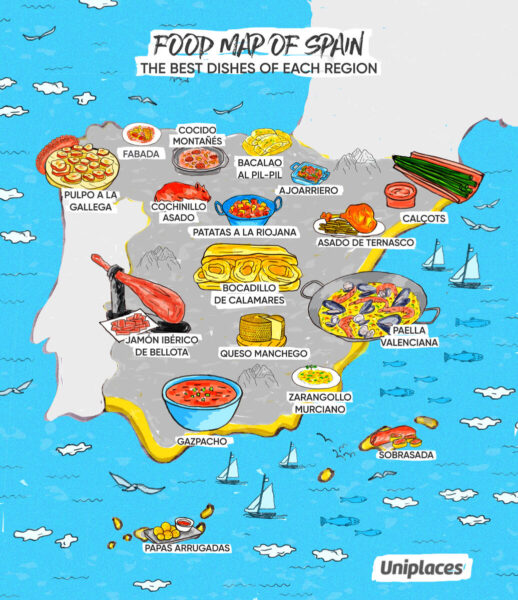
When people think of a dish that represents Spain, paella valenciana is usually the first thing that comes to mind.
But Spanish food culture is far too diverse for just one dish, so we wanted to give some love here to fabada — a hearty white bean stew with chorizo, morcilla (blood sausage) and pork, hugely popular across the country, especially in the winter months.
Pierogi (Poland)
Polish food is rich, hearty and deeply comforting, and pierogi are its ambassador to the world. These are boiled dumplings stuffed with potato and cheese, meat, mushrooms or fruit, depending on the version.
They’re served boiled or lightly pan-fried in butter with caramelized onion on top. This is the dish every Polish grandmother makes the moment you walk in from the cold — and once you try it, you completely understand why.
Tarte Tatin (France)
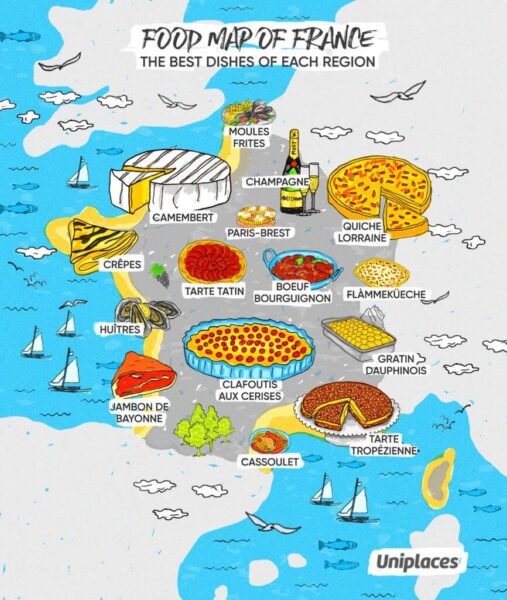
This tart is considered a specialty of France as a whole, even though it was actually invented by accident in the Loire region — one of the Tatin sisters let the apples cook too long and, rather than waste them, turned them into dessert.
It’s essentially an upside-down apple tart, where the fruit is caramelized before the pastry goes on top.
Tartiflette (France, the Alps)
We already covered Tarte Tatin as France’s sweet representative, but tartiflette deserves its own moment. It’s a bake of potatoes, Reblochon cheese, bacon and onion that originated in the Savoy Alps as fuel for skiers.
Today it’s found all over the country and it’s one of the most comforting winter dishes in French cooking. If you’re visiting Savoy or the Alps in cold season, this one’s mandatory.
Moules-frites (Belgium)
Belgium is much more than just chocolate and beer. Moules-frites—steamed mussels with French fries—are the quintessential national dish, and Belgians take both the quality of the mussels and the crispiness of the fries very seriously.
The combination may seem simple, but in Brussels or on the Flemish coast, you’ll find it elevated to an art form. They’re almost always served with a Belgian lager, which isn’t half bad either.
Moules-frites (Belgium)
Belgium is so much more than chocolate and beer. Moules-frites — steamed mussels with fries — is the country’s unofficial national dish, and Belgians take both the quality of the mussels and the crispness of the fries very seriously.
It might sound simple, but in Brussels or along the Flemish coast, it’s elevated to something close to an art form. Almost always paired with a Belgian blonde ale, which doesn’t hurt either.
Currywurst (Germany, Berlin)
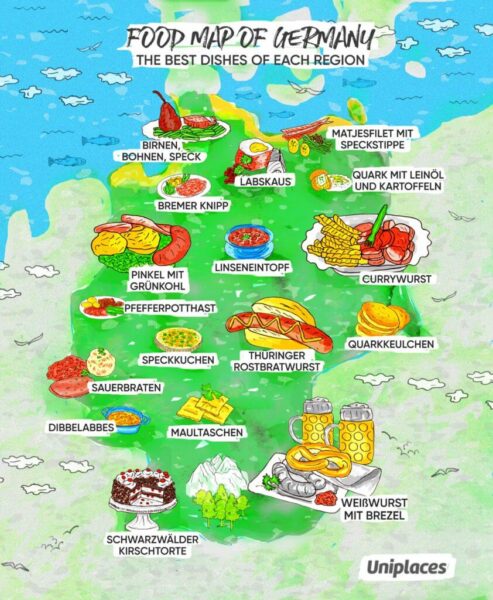
This street-food classic is about as German as it gets — you could almost call it the country’s calling card, built around the grilled or boiled sausage that’s such a staple of German cooking.
It’s topped with ketchup and curry powder, and it’s the perfect companion to a cold blonde beer. Consider it official survival food — you’ll find a currywurst stand pretty much everywhere.
Rösti (Switzerland)
Swiss cuisine varies a lot by region, but rösti is the one dish that unites the whole country. It’s shredded potato pan-fried in butter until golden and crisp outside, soft inside.
Originally a farmer’s breakfast in the canton of Bern, it’s now served as a side dish in almost every restaurant in the country. Simple, honest and delicious — very on-brand for Swiss food culture.
Shepherd’s Pie (Northern England)
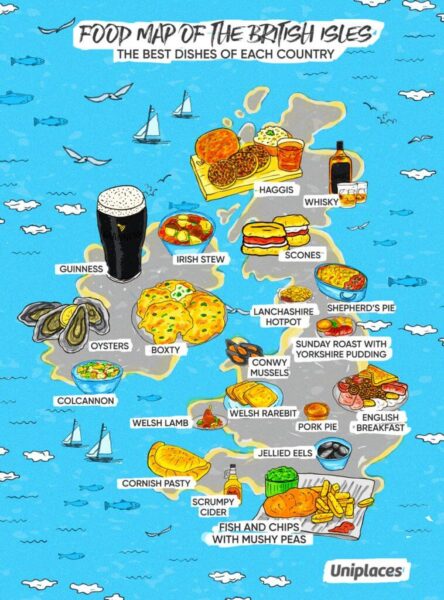
This is one of the most traditional British comfort foods: a layer of minced lamb cooked with vegetables like onion, peas, celery or carrot, topped with mashed potato.
It’s not exactly traditional, but plenty of people add grated cheese on top for extra flavor. You’ll also find versions made with beef or fish, and even a vegetarian take with lentils and soy.
Goulash (Hungary)
Goulash is probably the most exported dish out of Central Europe, but the original Hungarian version has almost nothing in common with what you’ll find outside the country. It’s a slow-cooked beef stew with sweet paprika, onion, tomato and caraway, simmered until the meat falls apart.
In Budapest it’s served in a clay pot, and paired with local artisan bread and a glass of Egri Bikavér wine, it’s one of those meals you’ll still be thinking about long after the trip is over.
Colcannon (Ireland)
This dead-simple Irish dish is made from mashed potato, cabbage, pepper, salt and butter, sometimes finished with a splash of milk, onion, garlic or cream.
It’s a Halloween staple, when small charms used to be hidden inside, each one meaning something different for whoever found it: a coin for wealth, a button or thimble for staying single, and a gold ring for marriage.
Cannoli (Sicily, Italy)
There’s nothing better than a cannolo to end a meal, go with an afternoon coffee, or curb a craving while you’re out sightseeing.
It’s a rolled, fried pastry shell filled with sweet ricotta cream and finished with toppings like chocolate chips or crushed nuts — dessert as pure indulgence.
Pašticada (Croatia)
Croatia has a stunning coastline and a food culture that blends Mediterranean and Central European influences. Pašticada is its most celebrated dish: beef marinated for hours in vinegar and spices, then slow-cooked with sweet wine, prunes and tomato.
It’s the dish for big occasions in Dalmatia — weddings, family celebrations, Christmas. If you’re visiting Split or Dubrovnik, look for it on menus in the old town.
Stamppot (Netherlands)
The Netherlands doesn’t have a big reputation as a food destination, but stamppot deserves more credit than it gets. It’s mashed potato mixed with vegetables — kale, carrot, onion or beetroot — and topped with a smoked sausage.
This is pure winter comfort food, exactly what you want after a day cycling through the rain in Amsterdam.
Ćevapi (Bosnia / the Balkans)
Ćevapi are small grilled sausages made from minced beef and lamb, served in flatbread with fresh onion and a red pepper sauce called ajvar. They’re the traditional fast food of the Balkans, found across Bosnia, Serbia and Croatia.
In Sarajevo they’re served ten to a plate, in the fluffiest flatbread you’ll ever try. They’re addictive from the first bite, and one of those dishes you’ll be trying to recreate long after you’re home.
Do you like trying local food when you travel?